Some of the best foam carving I’ve ever done, a less than stellar puppet.
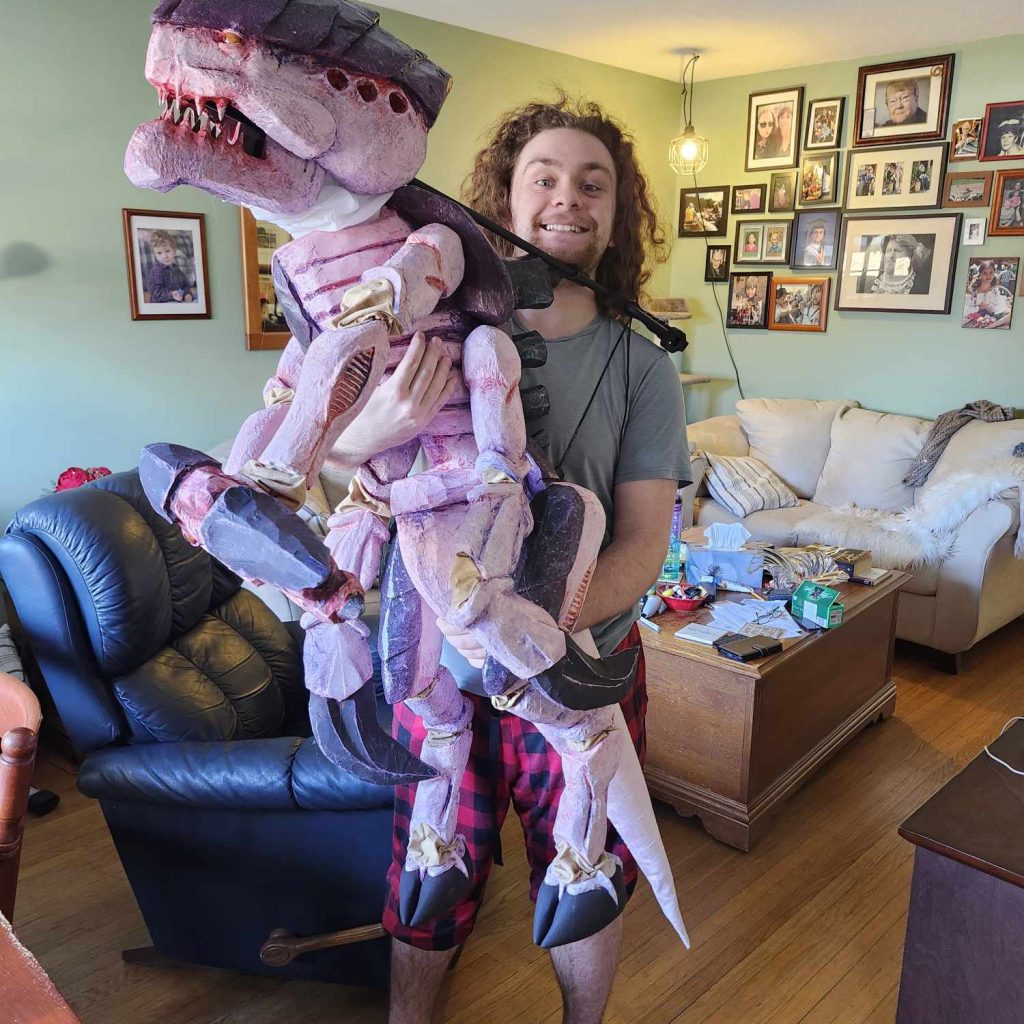
The second-year puppet project is a cornerstone of Sheridan’s props curriculum and my year was the first with a new version of it. Traditionally, we were just carving foam puppet heads onto premade mechanisms. Now, we make the whole puppet and design the mechanisms ourselves.
I had no idea what the hell I was doing.
Week 1, were making our rough prototypes. I slapped this little guy together and said something that has since become a catchphrase of mine. “It’ll be about the size of a housecat”.
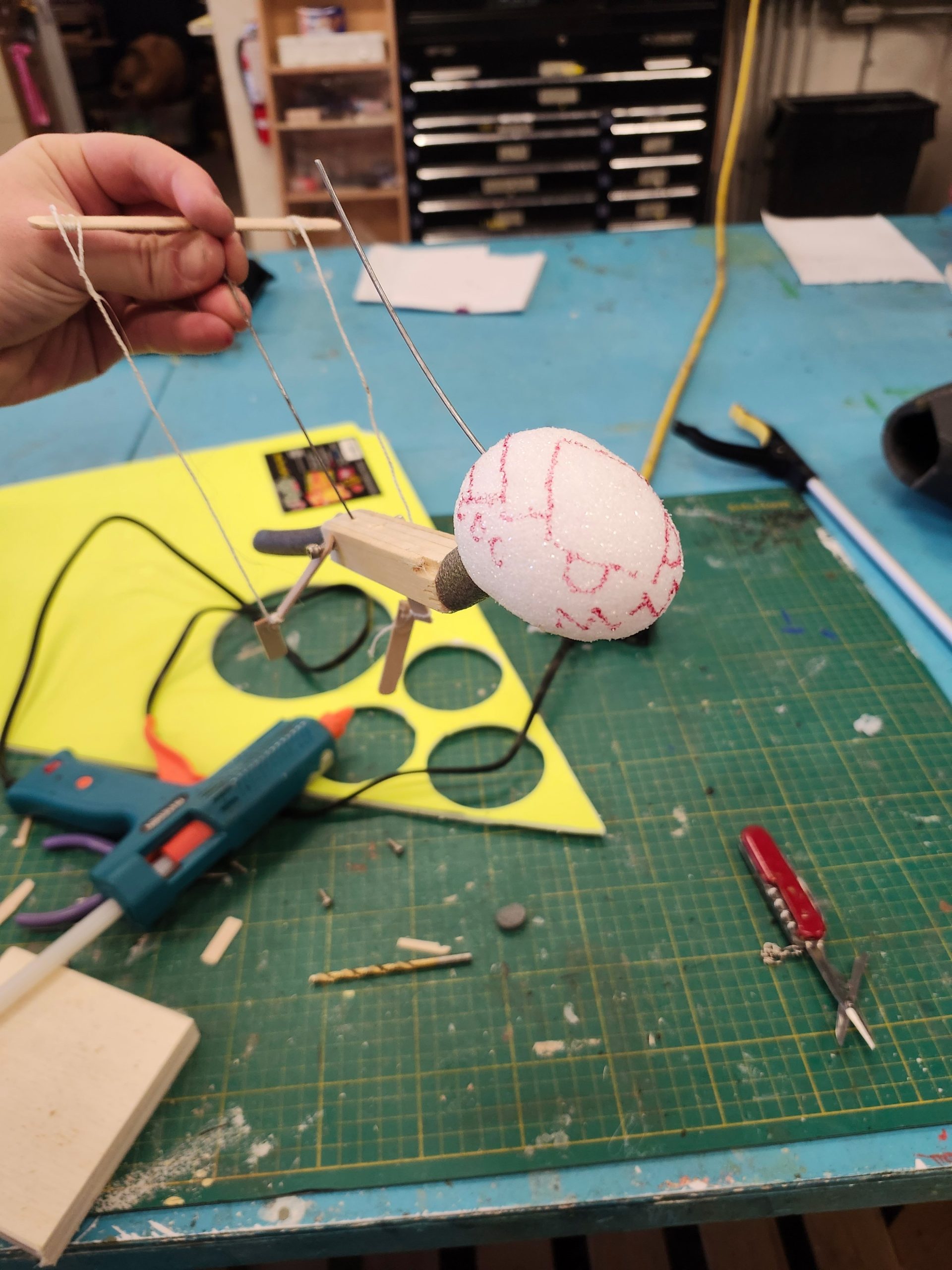
The way this would work in my head was that the bug’s feet would be lashed to mine by rods, while my hands were busy holding up the back and operating the jaw. The arms would be spring-loaded so they would have some bounce and wobble, but they didn’t really need to be controlled. I began with the jaw mechanism, which was just a new claw built around a dollar store reacher-grabber thing. For whatever reason, I let that define my scale. The next week I came in with a PVC pipe and MDF skeleton that came up to my waist.
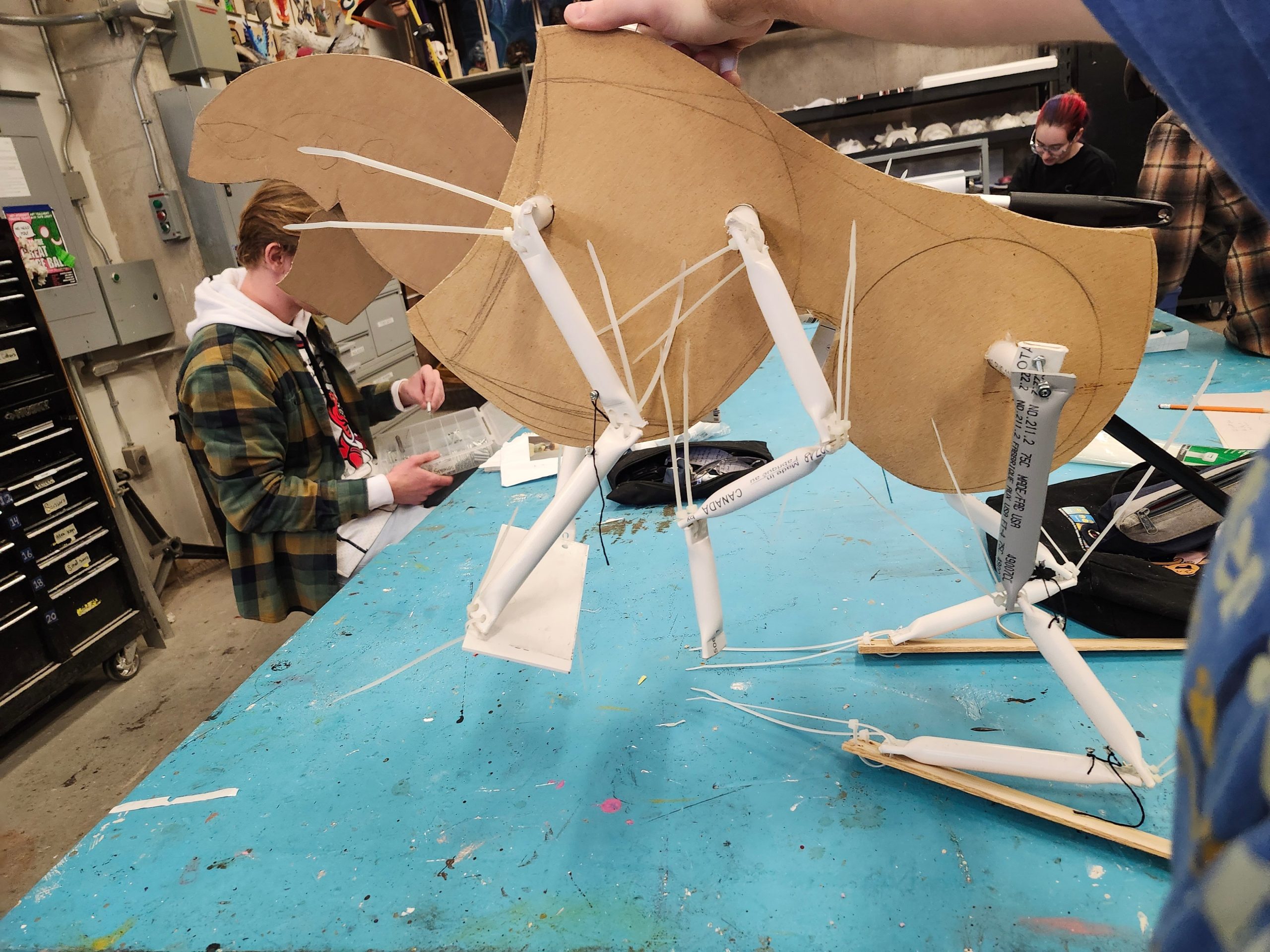
That’s a big housecat.
Five weeks left, I’m committed now. I need to do way too much foam carving in the next five weeks to spend much longer on planning. I have to get started. I also switched out the MDF frame pieces for pieces made of a lightweight plastic I have yet to be able to identify because GOD MDF is heavy what was I thinking??
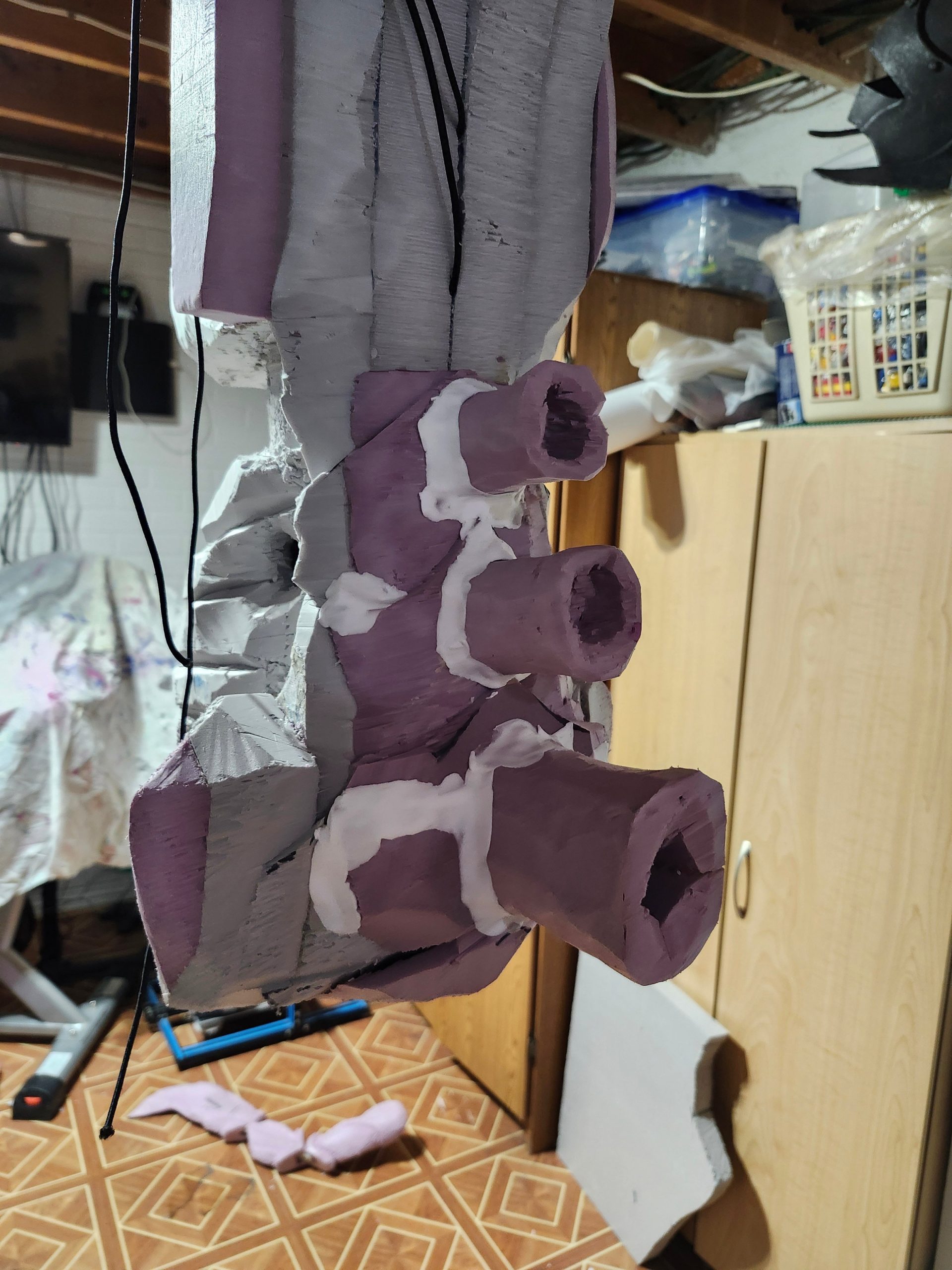
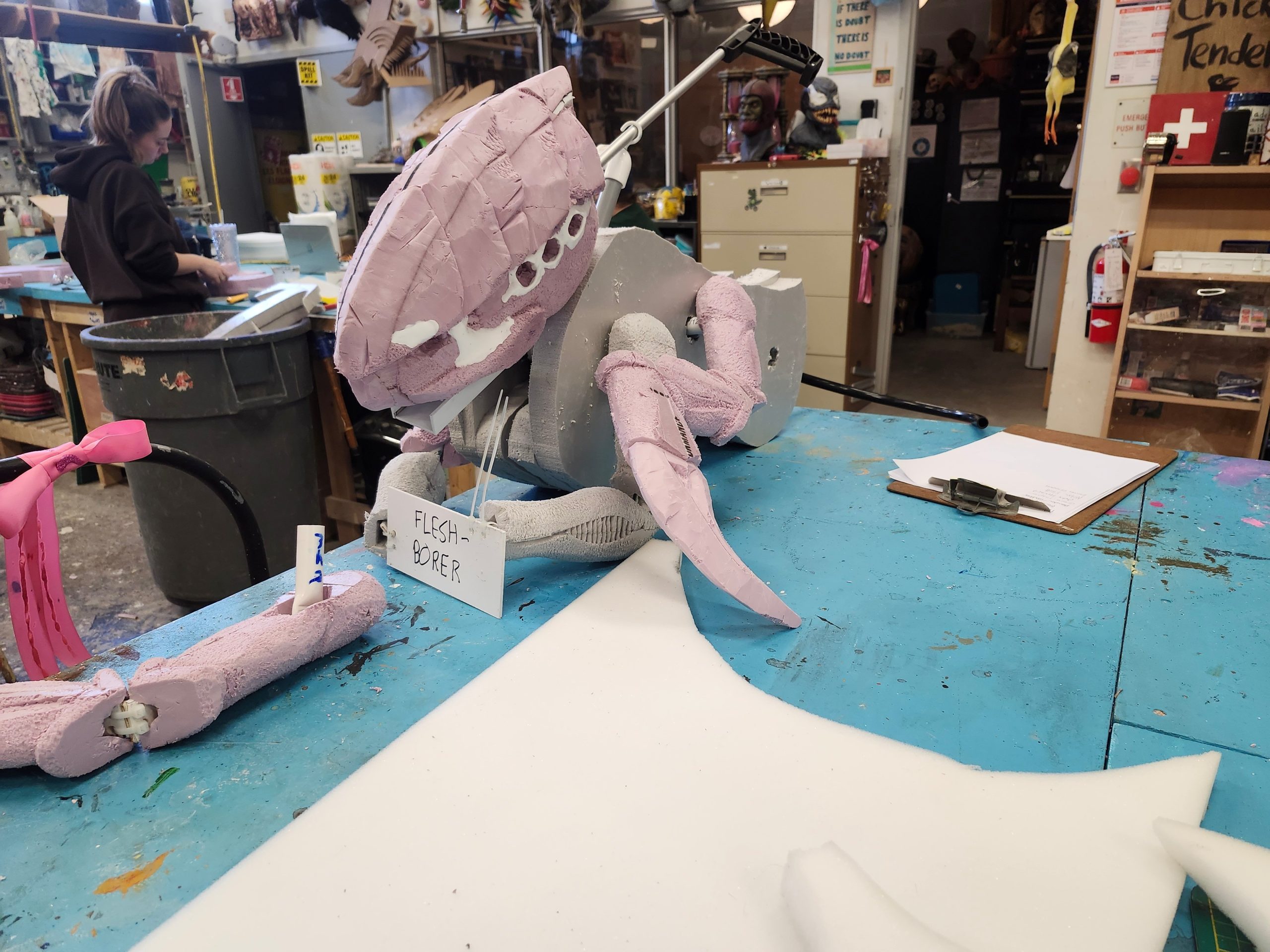
The next five weeks were a mad dash where my every free waking moment was spent cladding this frame in XPS foam and carving it into a bug. I also wanted a soft tail that could swish as the puppet moved, so I made that out of upholstery foam with a fabric sheath that was blended into the tissue paper scrim all over the rest of the puppet. However, I had overlooked that upholstery foam needs to be segmented if I want it to swish, so it’s a rigid tail.
Now, we can finally move on to something I actually got useful guidance on and feel good about: painting. Now, I have lots of experience painting Tyranids. However, it’s been my experience that paint techniques generally scale down better than they scale up. However, my teacher was able to help me come up with a paint scheme that captured the same feel, whicle looking correct at this scale.
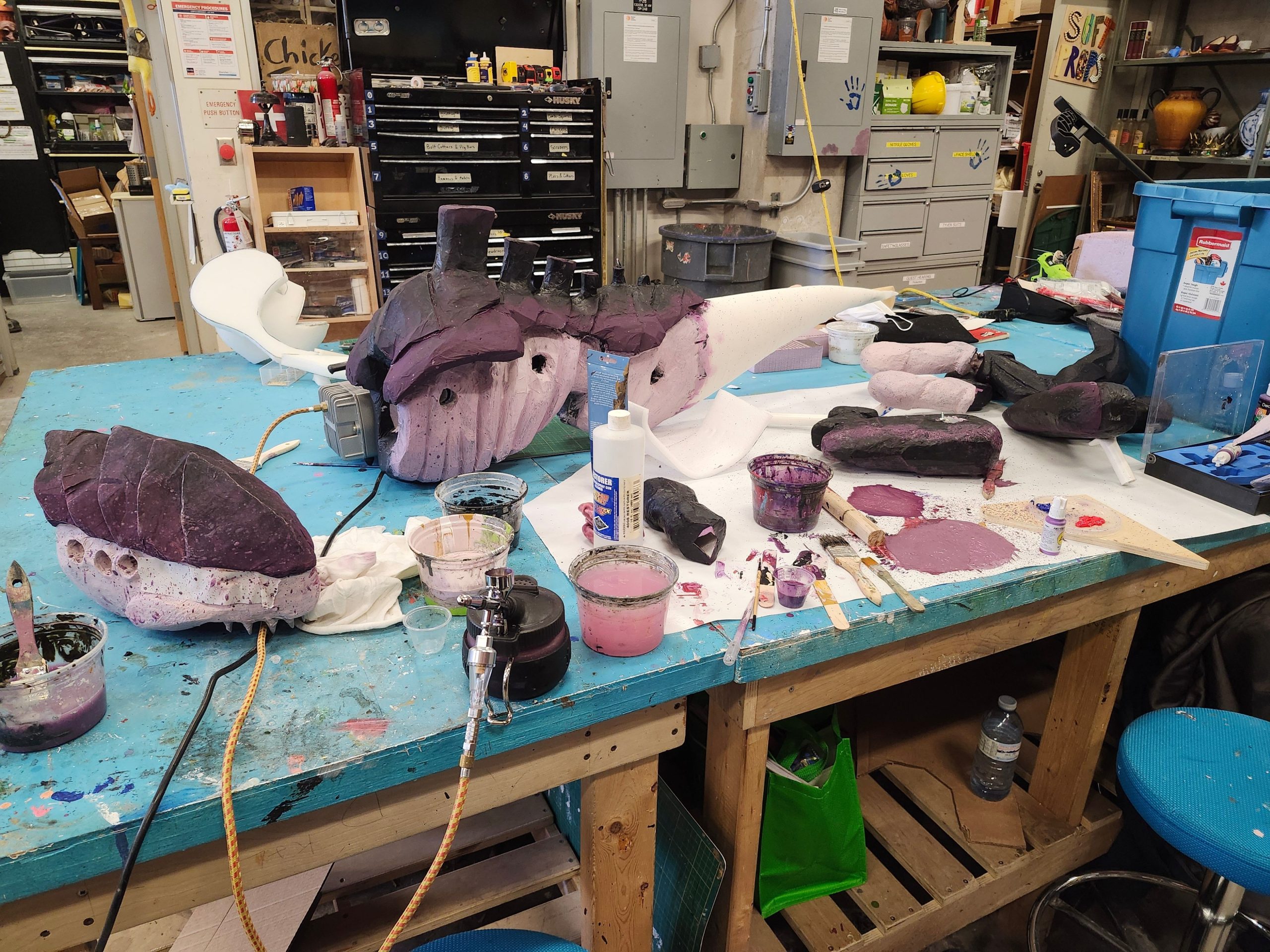
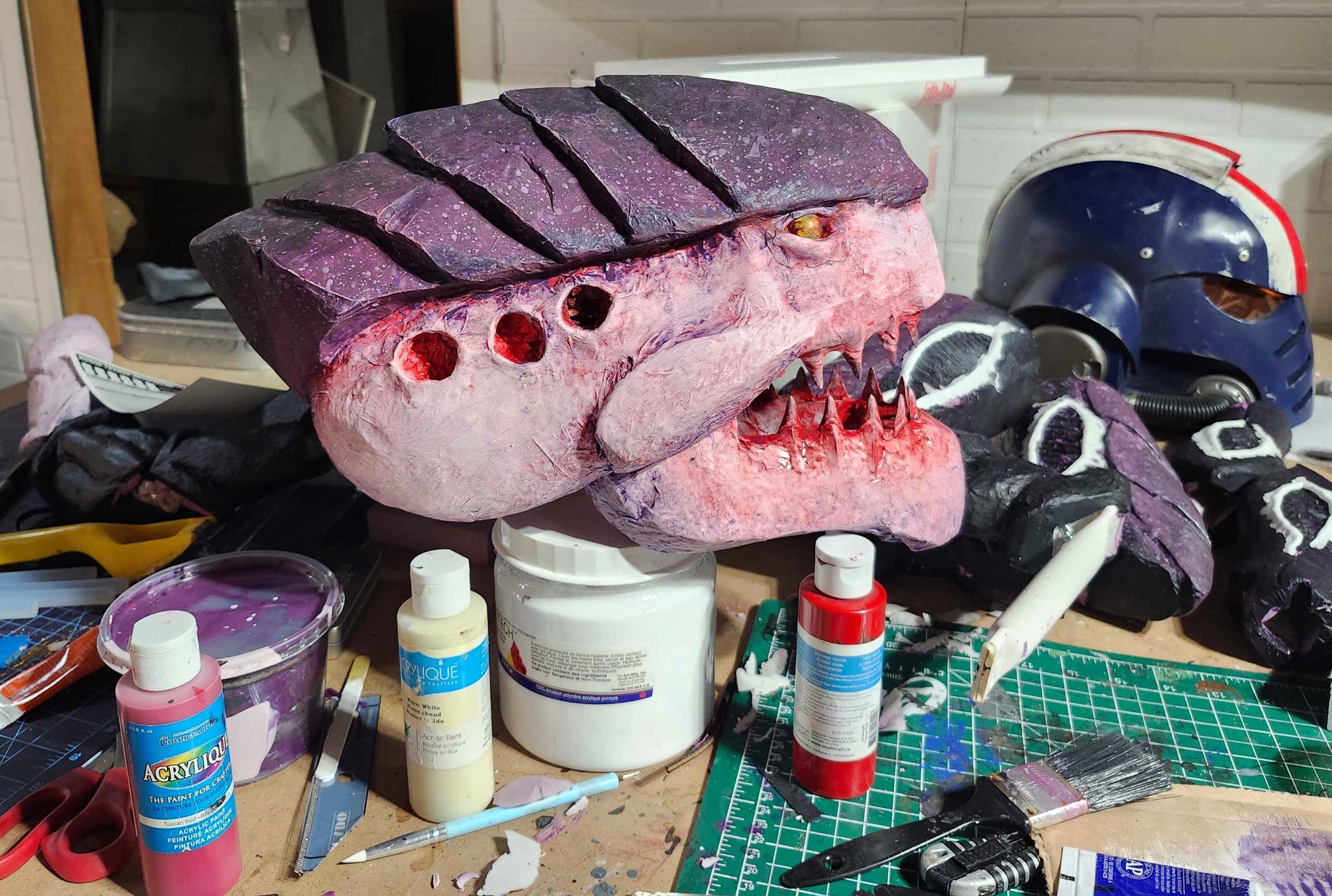
I started with the hard shell because I was going to be doing some splattering. Much like my little bugs, it was a purple that faded into black towards the center, covered in polka dots like you see on many different species of crustacean. This ‘coconut crab’ scheme is a very popular way of painting Tyranids. So, splatter time! I made quite the mess in Sheridan’s prop shop doing this and while it didn’t work quite as well as I had hoped, it did work.
The rest was basecoated in a very, very pale pink, shaded down with red, blue, black, and pink washes. I picked out all the ribbed fleshy bits with a fleshy wash, and it was, at least, painted. Finally, I used a few scraps of muslin to cover up the joints and a tube of ribby-looking fabric to give it a neck and… Well, it’s done… a week late. It was delivered late and not a very good puppet. None of us made very good puppets that year.
While I’m incredibly amused by being the owner of a golden retriever-sized termagant, and impressed by how much sculpting I had been able to do that quickly, it’s clear that I still have a lot to learn about puppetry and puppet making.
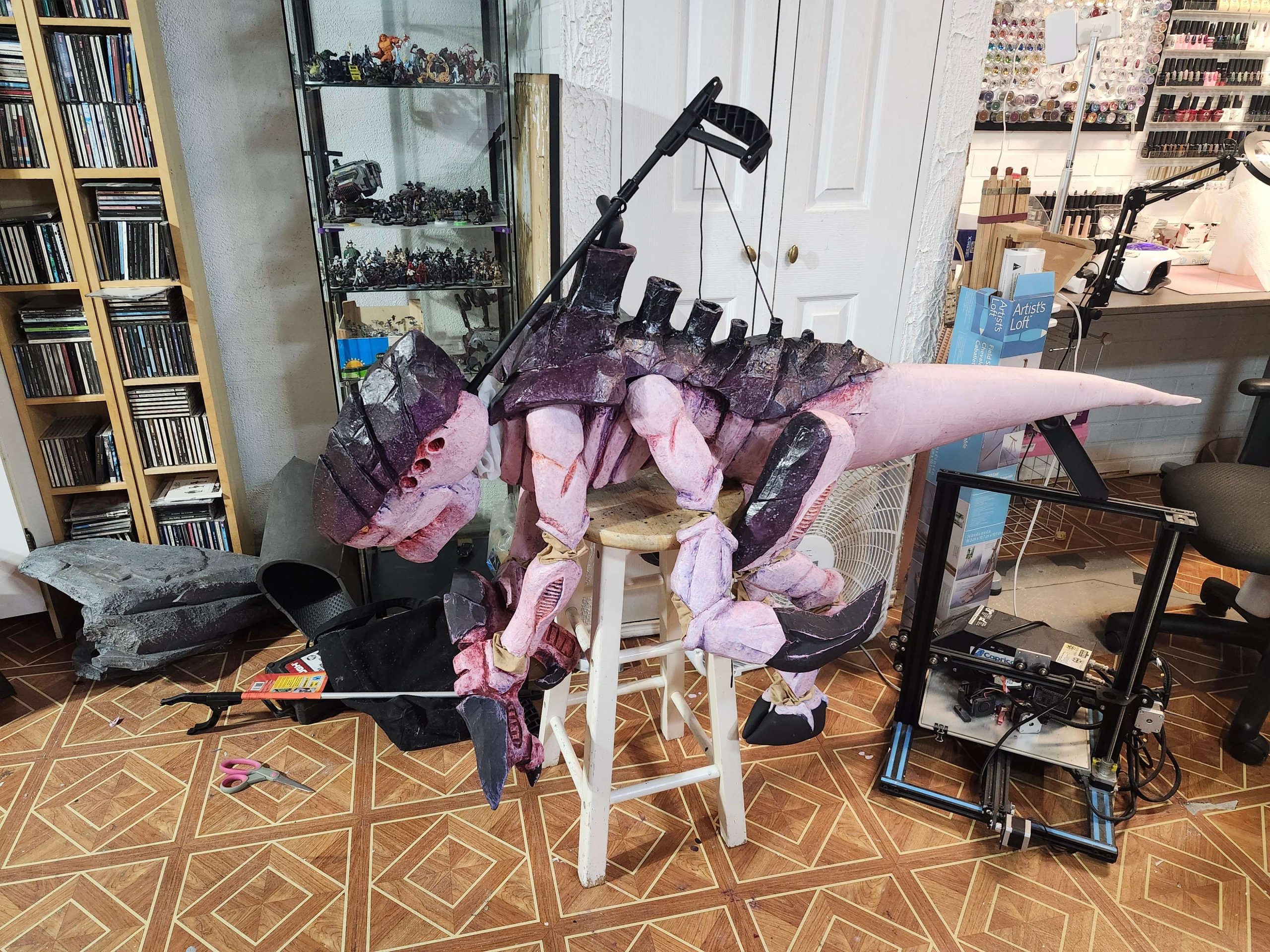
Now I have this in my house. What do I do with it.
Leave a Reply